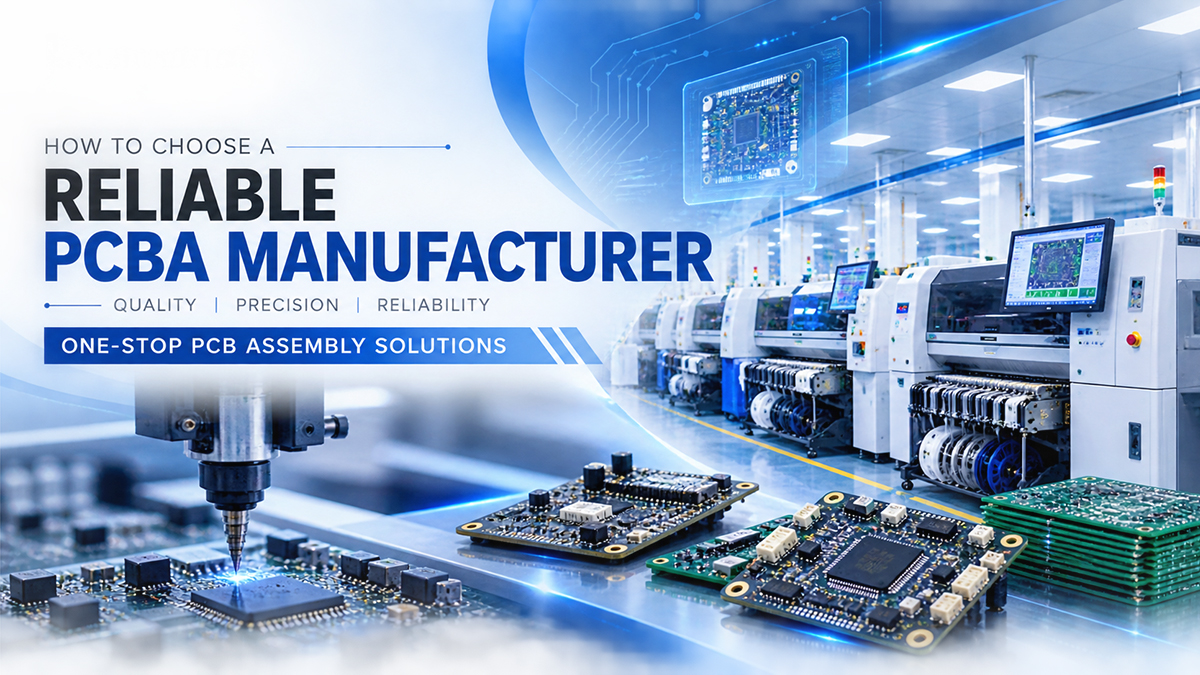
A reliable manufacturing partner does much more than place components onto a PCB. The manufacturer can affect component quality, assembly consistency, production lead time, testing reliability, product performance, and ultimately the success of mass production.
This is especially important for complex electronic products such as UAV flight controller PCBAs, robotic control boards, smart home controllers, industrial electronics, IoT devices, and other customized embedded systems.
So, how do you evaluate a PCB assembly supplier before sending your Gerber files and BOM?
In this guide, we explain 10 important factors to consider when choosing a reliable PCBA manufacturing partner.
1. Check the Manufacturer's PCB Assembly Capabilities
The first step is to determine whether the supplier has the manufacturing capabilities required for your project.
Different electronic products may require different assembly processes. A professional PCB assembly manufacturer should be able to support both prototype development and stable mass production.
Typical manufacturing capabilities include:
* SMT assembly
* THT / DIP assembly
* Fine-pitch component assembly
* BGA and QFN assembly
* Double-sided PCB assembly
* Mixed SMT and through-hole assembly
* Prototype PCBA
* Low-volume production
* High-volume production
* Manual soldering for special components
* Final product assembly
For complex control boards, manufacturing capability becomes even more important because a single PCB may contain an MCU, IMU, communication ICs, MOSFETs, sensors, connectors, memory devices, and other components with different package sizes.
Before selecting a supplier, make sure its production process matches the complexity of your product.
 2. Evaluate Component Sourcing Capability
Component sourcing is often one of the most underestimated parts of PCBA manufacturing.
A complete BOM may contain dozens or even hundreds of components from different manufacturers.
These may include:
* MCU
* IMU and sensors
* MOSFETs
* Power management ICs
* Communication ICs
* Memory
* Resistors and capacitors
* Connectors
* Inductors
* Diodes
* Crystals and oscillators
A reliable PCBA manufacturer should not simply purchase the cheapest components available.
It should help customers manage component availability, lead time, traceability, and potential alternatives.
Before placing an order, ask your supplier:
* Can you source the complete BOM?
* Are component sources traceable?
* Can you support customer-supplied components?
* Can you identify obsolete or difficult-to-source parts?
* Can engineers recommend alternative components when necessary?
* Will alternative components be confirmed before production?
This becomes especially important during mass production because even one unavailable IC can delay the entire manufacturing schedule.
Good component sourcing capability can significantly reduce supply-chain risks.
 3. Review SMT Equipment and Production Capacity
Modern PCB assembly depends heavily on automated equipment.
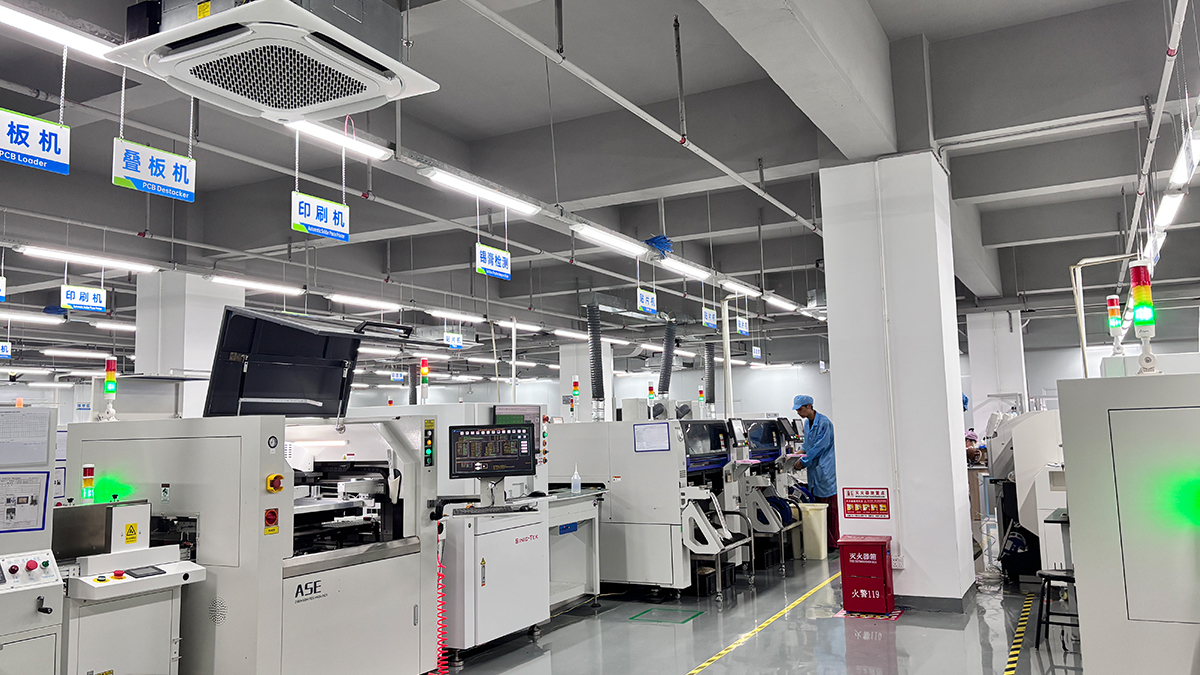
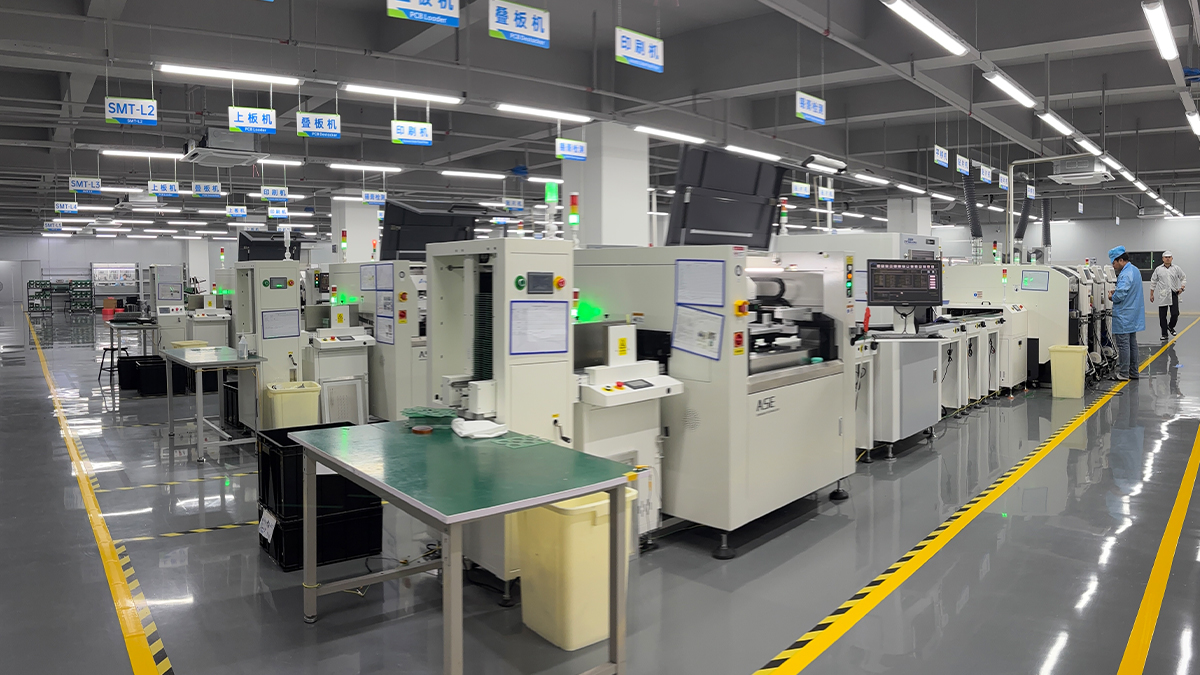
A professional PCBA factory normally uses a combination of:
Solder Paste Printing → SPI → Pick & Place → Reflow Soldering → AOI → Inspection & Testing
Production equipment affects placement accuracy, soldering quality, production speed, and consistency
between different batches.
When evaluating a custom PCBA manufacturer, do not focus only on how many SMT lines the factory has.
Also consider whether its equipment and production management system can handle:
• Small components
• Fine-pitch ICs
• BGA packages
• High-density PCBs
• Double-sided assembly
• Mixed component sizes
• Prototype production
• Large-volume production
A capable production line should be flexible enough to support both engineering samples and future mass
production.
4. Check the Quality Control ProcessLow PCBA prices are meaningless if the boards fail after assembly.
Quality control should cover the entire production process rather than relying only on final inspection.
A typical PCBA quality-control process may include:
Incoming Material Inspection
Components and PCBs should be inspected before entering production.
SPI Inspection
Solder Paste Inspection helps identify solder paste printing problems before component placement.
AOI Inspection
Automated Optical Inspection can detect missing components, polarity errors, soldering defects and placement deviations.
X-Ray Inspection
For BGA and other hidden solder joints, X-ray inspection may be required.
Final Inspection
Completed PCB assemblies should receive final inspection before shipment.
·Missing components
·Incorrect component placement
·Component polarity errors
·Soldering defects
·Position deviation
·X-Ray Inspection
For components such as BGA where solder joints cannot be inspected visually, X-ray inspection may be required.
Final Inspection:
Completed PCB assemblies should receive visual or automated inspection before shipment.
A structured quality-control system helps prevent defects from moving from one manufacturing stage to the next.
5. Ask About PCBA Testing CapabilitiesInspection and functional testing are not the same thing.
AOI can determine whether components are placed correctly, but it cannot always confirm whether the entire electronic system works as designed.
Depending on the product, PCBA testing may include:
Flying Probe Testing
ICT
Functional Testing (FCT)
Power-on testing
Firmware programming
Interface testing
Communication testing
Burn-in testing
Customized test fixtures
For example, a UAV flight controller may require verification of power rails, MCU operation, sensor communication, USB interfaces, UART interfaces, and other functions.
A robotic control board may require completely different testing procedures.
Therefore, for customized electronic products, the manufacturer should be able to develop a testing procedure according to the actual product requirements.
6. Look for DFM and Engineering SupportA good PCBA manufacturer should identify manufacturing risks before production starts.
Before PCB assembly, engineers should review the customer's
manufacturing files, which normally include:
Gerber files
BOM
Pick & Place files
Assembly drawings
Firmware or testing requirements, if applicable
This process is commonly known as Design for Manufacturability (DFM) review.
DFM analysis may identify issues such as component orientation, footprint problems, spacing limitations, BOM inconsistencies, manufacturing tolerances, or assembly risks.
Finding these problems before production is much less expensive than discovering them after hundreds or thousands of boards have already been assembled.
To understand the complete production workflow, read our guide to Gerber, BOM and Pick & Place files and the custom control board manufacturing process. 7. Make Sure the Factory Can Support Prototype to Mass ProductionMany electronic projects begin with only a few prototypes.
However, if the product is successful, production may quickly increase from:
5–10 prototypes → 100-unit pilot run → 1,000+ units → continuous mass production
Changing manufacturers during this process can introduce unnecessary risks.
A suitable manufacturing partner should therefore support the complete product lifecycle:
Prototype → Engineering Validation → Pilot Production → Mass Production
During prototype production, flexibility and engineering communication are particularly important.
During mass production, production capacity, quality consistency, component supply, and traceability become more important.
8. Consider Experience With Custom Control BoardsNot all PCB assemblies have the same manufacturing requirements.
A simple LED PCB and a high-performance embedded control board can be very different in terms of component density, testing, firmware, power design, and assembly difficulty.
For customized control-board projects, it is helpful to work with a manufacturer that has experience in products such as:
UAV Flight Controller PCBA
Flight controllers often integrate high-performance MCUs, IMUs, power management, communication interfaces, memory, and other compact components.
Robot Control Board
Robot electronics may require motor control, sensor interfaces, communication, power management, and high-reliability connectors.
Smart Home Control Board
Smart home products may integrate wireless communication, sensors, relays, power management, and user-interface functions.
Industrial Control Board
Industrial electronics often require stable operation, long-term component availability, reliable communication, and strict quality control.
If you are developing a customized electronic controller, you can also learn more about PCB control board types, components and applications in our previous guide.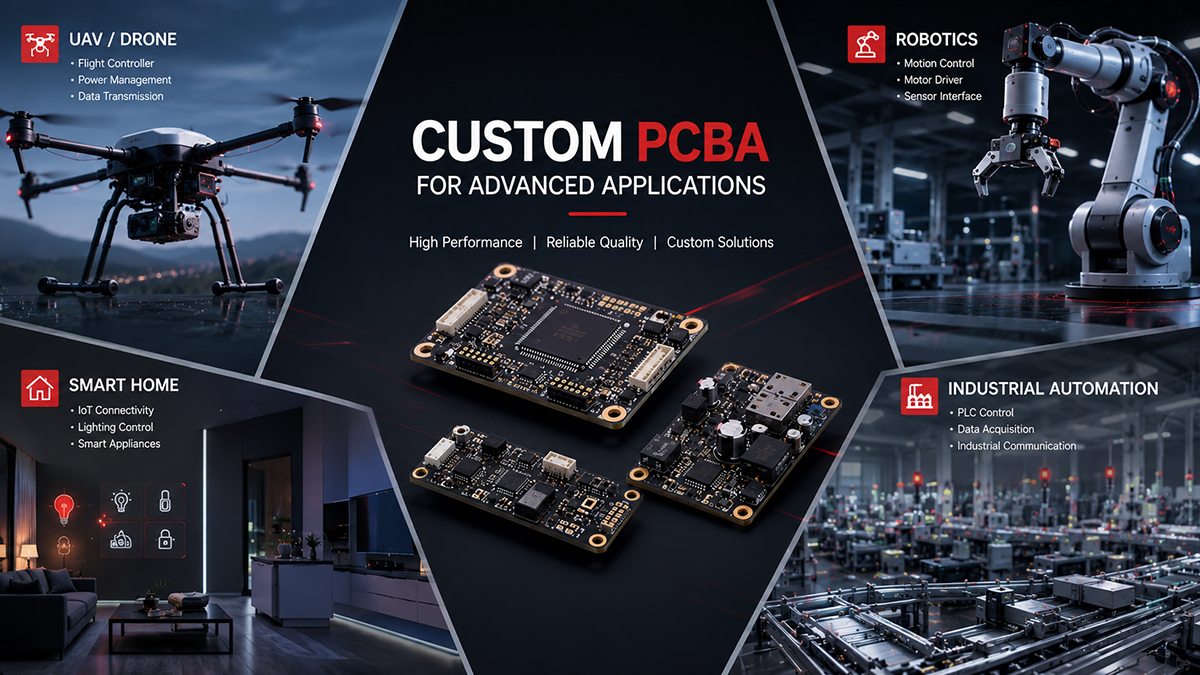 9. Evaluate Lead Time and Supply Chain Management
PCBA lead time is affected by several factors.
These include:
PCB fabrication time
Component availability
Component procurement lead time
SMT production scheduling
Assembly complexity
Testing requirements
Order quantity
Special manufacturing processes
A reliable manufacturer should provide a realistic production schedule rather than simply promising the shortest possible delivery time.
For long-term projects, supply-chain planning is particularly important.
Critical ICs or components with long lead times should be identified early so that procurement does not interrupt future production.
This is especially important for products that will remain in production for several years.
10. Communication and Engineering Support MatterGood communication is often overlooked when selecting a PCBA supplier.
However, custom electronics manufacturing involves many technical details.
During production, questions may arise regarding:
BOM differences
Component substitutions
PCB design
Component polarity
Firmware
Testing procedures
Mechanical assembly
Packaging requirements
A professional manufacturing partner should communicate these issues before making important production decisions.
For international customers, clear communication between the customer, engineers, purchasing team, and production team can significantly reduce misunderstandings and manufacturing delays.
How to Evaluate a PCBA Manufacturer Before Placing an Order
Here is a simple checklist you can use when comparing different PCBA suppliers:
| Evaluation Item |
What to Check |
| Manufacturing |
SMT + THT/DIP capability |
| Components |
BOM sourcing and traceability |
| Equipment |
SMT, SPI, AOI and inspection capability |
| Engineering |
DFM and technical support |
| Prototype |
Small-batch production capability |
| Mass Production |
Production capacity and consistency |
| Testing |
ICT, FCT or customized testing |
| Quality |
Process inspection and final inspection |
| Supply Chain |
Component availability management |
| Communication |
Engineering response and project support |
Price is certainly important, but it should not be the only factor.
For long-term electronic products, manufacturing consistency, engineering support, component quality, and supply-chain stability often have a much greater impact on the total project cost.
Why Work With RONGHE for Custom PCBA Manufacturing?
Shenzhen Ronghe Electronic Co., Ltd. provides one-stop PCB and PCBA manufacturing services for customized electronic products.
Our manufacturing services cover:
- PCB fabrication
- Component sourcing
- SMT assembly
- DIP / THT assembly
- Manual soldering
- AOI inspection
- Functional testing
- Firmware programming support
- Conformal coating
- Product assembly
- OEM and ODM manufacturing
We focus on customized electronic control products for applications including:
UAV & Drone Electronics | Robotics | Smart Home | Industrial Control | IoT & Embedded Electronics
From early prototypes to stable mass production, our goal is to help customers reduce manufacturing risks and simplify their electronics supply chain.
FAQ About Choosing a PCBA Manufacturer
What Files Should You Send to a PCBA Manufacturer?
To receive an accurate PCBA quotation, prepare the following files and project information:
Gerber Files — PCB fabrication data
BOM — Component part numbers and quantities
Pick & Place File — Component coordinates and orientation
Assembly Drawing — Special assembly requirements
Order Quantity — Prototype or mass-production volume
Testing Requirements — ICT, FCT, firmware programming or customized testing
What is the difference between PCB and PCBA?
A PCB is the bare printed circuit board, while a PCBA is a PCB that has electronic components assembled onto it.
Can I order PCBA prototypes before mass production?
Yes. Prototype assembly is recommended for new electronic products because it allows engineers to verify the design, assembly process, firmware, and product functions before moving to mass production.
How do I get an accurate PCBA quotation?
Providing complete manufacturing files is the best way to receive an accurate quotation. The manufacturer should review the PCB design, BOM, component availability, assembly requirements, testing requirements, and order quantity before quoting.
Looking for a Reliable PCBA Manufacturing Partner?
Have your Gerber, BOM or Pick & Place files ready?
Send us your project files for an engineering review and PCBA quotation.
RONGHE provides one-stop support from component sourcing and PCB assembly to testing, conformal coating and final product assembly.
Whether you are developing a UAV flight controller, robotic control system, smart home controller, industrial electronic product, or another customized PCB assembly, our team can support your project from prototype to mass production.
UPLOAD BOM & GERBER FILESCONTACT OUR ENGINEERING TEAM


